
San José E3 Requirements at a Glance
San José’s Exterior Elevated Elements page explains local E3 reporting expectations under California SB 721 and SB 326. The requirements apply to certain apartment buildings and condominium projects with balconies, decks, stairways, walkways, guardrails, handrails, and related exterior elevated elements more than six feet above grade.
| Requirement | San José E3 Program Summary |
|---|---|
| Local program | City of San José Exterior Elevated Elements (E3) |
| City department | Planning, Building & Code Enforcement / Code Enforcement / Multiple Housing Inspection Program |
| Local ordinance number | No separate San José E3 ordinance number verified; the city process is based on state SB 721 and SB 326 requirements |
| State law basis | SB 721 for qualifying apartment buildings; SB 326 for qualifying condominium projects and common interest developments |
| Applies to | Apartment buildings with three or more units under SB 721; condominium associations with three or more units under SB 326 |
| Covered elements | Balconies, decks, stairways, walkways, landings, guardrails, handrails, and related exterior elevated elements |
| Height threshold | Exterior elevated elements more than six feet above grade or ground |
| Material scope | Wood-framed exterior elevated elements; the city FAQ states the E3 program does not apply to balconies or stairwells made completely of concrete or steel |
| Apartment report deadline | SB 721 apartment E3 reports are due January 1, 2026 |
| Apartment inspection cycle | Every six years |
| Condominium report deadline | January 1, 2025 |
| Condominium inspection cycle | Every nine years |
| Report submission | E3@sanjoseca.gov |
| Affidavit requirement | Effective January 5, 2026, licensed professionals are required to complete and submit an affidavit along with the full report; the affidavit does not replace the E3 report |
What Is San José Exterior Elevated Elements (E3)?
San José’s Exterior Elevated Elements page is the city’s local guidance page for E3 inspection requirements under California SB 721 and SB 326. The city explains that these laws help keep balconies, decks, stairways, and walkways safe by requiring regular inspection, maintenance, and repair.
For San José apartment owners, SB 721 applies to apartment buildings with three or more units and qualifying exterior elevated elements. For condominium associations, SB 326 applies to condominium projects with qualifying exterior elevated elements.
The practical question for San José property owners is not whether there is a unique local ordinance number. The more important question is whether the property is covered by SB 721 or SB 326, whether the exterior elevated elements need inspection, whether repair conditions are found, and whether the report or affidavit needs to be submitted to the city.
Do San José E3 Requirements Apply to Your Building?
San José E3 requirements may apply if your apartment building or condominium project has qualifying exterior elevated elements more than six feet above grade or ground.
Covered Property Types
Covered Exterior Elevated Elements
Inspection Requirement vs. City Submission
San José’s E3 page distinguishes between regular inspection requirements and report submission triggers. Emergency conditions must be reported quickly. Non-emergency corrective work follows permitting and repair timelines. If no repairs are required, the city page states that an inspection report is not required to be submitted.
What Counts as an Exterior Elevated Element in San José?
For San José E3 purposes, exterior elevated elements are building features that:
Key Criteria:
Common Examples:
San José’s FAQ states that the E3 program applies only to wood-framed exterior elevated elements and not to balconies or stairwells made completely of concrete or steel. Any exterior elevated element more than six feet above grade or ground should be evaluated before assuming it is exempt.
San José E3 vs. SB 721 vs. SB 326
San José property owners may hear several related terms: E3, SB 721, SB 326, exterior elevated elements, balcony inspection law, report affidavit, and Code Enforcement submission. These terms are connected, but they do not all mean the same thing.
San José E3
San José E3 refers to the city’s Exterior Elevated Elements guidance and reporting process under the Multiple Housing Inspection Program. It explains how SB 721 and SB 326 reports, affidavits, repair timelines, and submission requirements are handled locally.
SB 721
SB 721 applies to qualifying apartment buildings with three or more units and exterior elevated elements. San José states that SB 721 apartment E3 reports are due January 1, 2026, with ongoing inspection frequency every six years.
SB 326
SB 326 applies to condominium associations with three or more units and qualifying exterior elevated elements. San José lists the first report deadline as January 1, 2025, with ongoing inspection frequency every nine years.
How They Work Together in San José
SB 721 and SB 326 establish the inspection requirements for apartments and condominiums. San José’s E3 page explains local reporting expectations, affidavit submission, repair timelines, and when reports must be submitted to the city. Emergency conditions require immediate safety measures and city notification. Non-emergency repairs require permit and repair follow-through. If no repairs are required, the city page states that no report is required.
San José E3 Inspection Deadlines and Cycles
Inspection timing depends on whether the property is an apartment building or a condominium project.
Apartment Buildings
For apartment buildings with three or more units and qualifying exterior elevated elements, San José states that SB 721 apartment E3 reports are due January 1, 2026. Ongoing inspection frequency is every six years.
Condominium Projects
For condominium associations with three or more units and qualifying exterior elevated elements, San José lists the first report deadline as January 1, 2025. Ongoing inspection frequency is every nine years.
Newer Buildings
San José’s FAQ states that newly constructed residential buildings are exempt from the E3 inspection requirement for six years from the date the building’s Certificate of Occupancy is issued.
Who Can Perform a San José E3 Inspection?
San José requires the inspection to be performed by a qualified licensed professional. A current employee of the City of San José cannot perform the inspection.
For apartment buildings covered by SB 721, qualified inspectors may include licensed architects, licensed civil or structural engineers, certified building inspectors or building officials from a recognized association, and licensed contractors holding an “A,” “B,” or “C-5” CSLB classification with at least five years of relevant experience constructing multistory wood-frame buildings.
For condominium projects covered by SB 326, San José lists licensed architects and structural engineers as qualified inspectors.
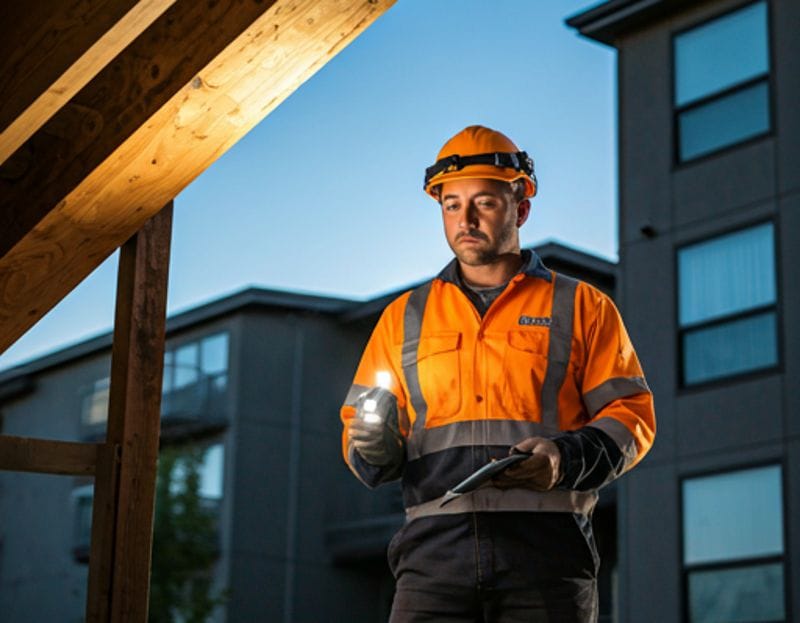
What Does a San José E3 Inspection Look For?
A San José E3 inspection is intended to determine whether exterior elevated elements are safe, functional, and free from conditions that may require emergency repair, corrective maintenance, further investigation, or future monitoring.
The purpose is to identify safety risks, document exterior elevated element conditions, and clarify whether repairs, permits, city reporting, or ongoing maintenance are required.
What Happens After the San José E3 Inspection?
After the inspection, a licensed professional provides a valid stamped or signed written report to the owner or the owner’s designated agent within 45 days of completing the inspection, unless emergency repairs are needed.
San José’s E3 page states that emergency conditions require immediate safety measures and report submission within 15 days. Non-emergency corrective maintenance requires a permit application within 120 days and repair completion within 120 days after permit issuance. If no repairs are required, the city page states that no report is required.
DrBalcony helps owners understand the inspection findings, prioritize next steps, and prepare for report documentation, affidavit submission, permit coordination, repair planning, and ongoing maintenance.
Review the inspection findings
Identify affected exterior elevated elements
Determine whether emergency or non-emergency repairs are required
Provide the written report to the owner or designated agent
Submit required report and affidavit to San José when required
Restrict access immediately if an emergency condition is found
Apply for permits within the required timeline for non-emergency repairs
Complete repairs and maintain records for the required inspection cycles
San José E3 Inspection Process with DrBalcony
1
Property Review
We review your San José property type, ownership structure, dwelling units, and exterior elevated elements.
2
On-Site Inspection
A qualified professional inspects balconies, decks, stairways, walkways, landings, guardrails, handrails, and related exterior elevated elements.
3
Report Documentation
We document exterior elevated element conditions, safety concerns, repair needs, and required report information.
4
Affidavit and Repair Guidance
We help clarify affidavit, report, repair, permit, and city submission requirements when they apply.
5
Compliance Support
We help San José owners understand what to retain, what may need to be submitted, and how to move forward after inspection.
Why San José Property Owners Choose DrBalcony
San José E3 compliance can be confusing because it connects state inspection laws, city report submission, affidavit requirements, emergency repair rules, permit timelines, and different requirements for apartment buildings and condominium associations.
DrBalcony helps property owners get clarity, document exterior elevated element conditions, and move forward with confidence if inspection, reporting, repairs, or permit coordination are needed.
- Apartment building owners
- Condominium associations
- HOA boards
- Property managers
- Real estate investors
- Mixed-use building owners
- Owners with balconies, decks, stairways, or walkways
- Owners who need help understanding San José E3 submission requirements
San José E3 Inspection FAQs
No separate San José E3 ordinance number has been verified. San José has an official Exterior Elevated Elements page that explains local report, affidavit, repair, and submission expectations under California SB 721 and SB 326.
No. SB 721 is the California inspection law for qualifying apartment buildings with three or more units. San José E3 is the city’s local guidance and submission process for exterior elevated element reports under SB 721 and SB 326.
No. SB 326 applies to qualifying condominium associations and common interest developments. San José E3 explains local expectations for reports, affidavits, repairs, and submission when SB 326 applies.
San José lists apartment buildings with three or more units under SB 721 and condominium associations with three or more units under SB 326. The requirement applies when the property has qualifying exterior elevated elements more than six feet above grade or ground.
San José describes exterior elevated elements as weather-exposed building features with a walking surface more than six feet above grade or ground. Examples include decks, balconies, landings, stairways, walkways, guardrails, handrails, and parts of those elements.
San José’s FAQ states that the E3 program applies only to wood-framed exterior elevated elements and not to balconies or stairwells made completely of concrete or steel. Owners should verify the actual construction before assuming an element is exempt.
For apartment buildings covered by SB 721, San José lists licensed architects, licensed civil or structural engineers, certified building inspectors or building officials from recognized associations, and certain qualified licensed contractors with relevant multistory wood-frame experience.
For condominium projects covered by SB 326, San José lists licensed architects and structural engineers as qualified inspectors.
San José states that SB 721 apartment E3 reports are due January 1, 2026. Ongoing inspection frequency is every six years.
San José lists the first report deadline for condominium associations as January 1, 2025. Ongoing inspection frequency is every nine years.
San José states that emergency conditions require immediate safety measures, such as blocking access, and that the licensed professional must submit the inspection report to the owner and the City within 15 days.
Yes. DrBalcony can help review your property type, inspect qualifying exterior elevated elements, document conditions, and clarify whether report submission, affidavit completion, repairs, permits, or follow-up action may be needed.
Need help with San José E3 inspection requirements?
Get a clear answer on whether your property is covered, what needs to be inspected, and what to do if reports, affidavits, repairs, or city submission are required.