
San Francisco Balcony Inspection Requirements at a Glance
San Francisco buildings may be subject to local Section 604 affidavit requirements, statewide SB 721 apartment inspection requirements, statewide SB 326 condominium inspection requirements, or more than one of these laws. The correct compliance path depends on building type, ownership structure, exterior appendage or exterior elevated element type, inspection cycle, and city or state documentation requirements.
| Requirement | San Francisco Compliance Summary |
|---|---|
| Local ordinance / code | San Francisco Housing Code Section 604 |
| City department | San Francisco Department of Building Inspection / Housing Inspection Services Division |
| Section 604 applies to | Apartment houses, residential condominium buildings with three or more dwellings, and hotels with six or more guest rooms when covered exterior appendages exist |
| Section 604 covered elements | Wood and metal decks, balconies, landings, exit corridors, stairway systems, guardrails, handrails, fire escapes, and parts of those elements in weather-exposed areas |
| Section 604 cycle | Affidavit submitted every six years |
| Section 604 documentation | Compliance affidavit submitted to DBI Housing Inspection Services Division |
| Section 604 email | dbi.hissection604@sfgov.org |
| SB 721 applies to | Qualifying apartment buildings with three or more multifamily dwelling units and exterior elevated elements |
| SB 721 cycle | Initial inspection deadline January 1, 2026, then every six years thereafter, except as otherwise provided by law |
| SB 326 applies to | Qualifying condominium associations and common interest developments |
| SB 326 cycle | First inspection deadline January 1, 2025, then every nine years thereafter |
| Important overlap | Some San Francisco properties may need to evaluate both Section 604 and statewide SB 721 or SB 326 requirements |
What Is San Francisco Housing Code Section 604?
San Francisco Housing Code Section 604 is the city’s local structural maintenance requirement for qualifying weather-exposed exterior appendages. The rule covers wood and metal decks, balconies, landings, exit corridors, stairway systems, guardrails, handrails, fire escapes, and parts of those elements in weather-exposed areas of covered apartment buildings and hotels.
Section 604 requires the responsible inspector to verify that the exit system, corridor, balcony, deck, or covered part is in generally safe condition, in adequate working order, and free from hazardous dry rot, fungus, deterioration, decay, or improper alteration.
Property owners provide proof of compliance by submitting a Section 604 compliance affidavit to the San Francisco Department of Building Inspection Housing Inspection Services Division. The current city materials state that completed affidavits are submitted every six years.
Which San Francisco Inspection Law Applies to Your Building?
San Francisco property owners may need to evaluate Section 604, SB 721, SB 326, or a combination of these laws depending on property type and ownership structure.
Covered Property Types
Covered Exterior Elevated Elements
One Building May Trigger More Than One Requirement
A San Francisco apartment building may need both Section 604 affidavit compliance and SB 721 exterior elevated element inspection compliance. A San Francisco condominium building may need SB 326 compliance and may also need Section 604 compliance depending on the building type and exterior appendage conditions. Do not assume one law automatically replaces the other.
What Counts as a Section 604 Exterior Appendage or EEE in San Francisco?
San Francisco Section 604 and the statewide EEE laws use related but not identical terminology. Section 604 focuses on weather-exposed exterior appendages, while SB 721 and SB 326 focus on qualifying exterior elevated elements.
Key Criteria:
Common Examples:
Section 604 is not limited to balconies and decks. It also includes weather-exposed landings, exit corridors, stairway systems, guardrails, handrails, fire escapes, and parts of those elements in covered San Francisco buildings.
Section 604 vs. SB 721 vs. SB 326 in San Francisco
San Francisco property owners may hear several related terms: Section 604, SB 721, SB 326, exterior appendages, exterior elevated elements, balcony inspection law, DBI affidavit, and HOA inspection report. These terms are connected, but they do not all mean the same thing.
Section 604
Section 604 is San Francisco’s local Housing Code requirement for covered weather-exposed exterior appendages in apartment buildings, residential condominium buildings, and hotels. It requires a compliance affidavit to be submitted to DBI Housing Inspection Services every six years.
SB 721
SB 721 applies to qualifying apartment buildings with three or more multifamily dwelling units and exterior elevated elements supported in whole or substantial part by wood or wood-based products. The statewide inspection deadline is January 1, 2026, with inspections every six years thereafter.
SB 326
SB 326 applies to qualifying condominium associations and common interest developments with exterior elevated elements. The first inspection deadline was January 1, 2025, with reinspection every nine years thereafter.
How They Work Together in San Francisco
Section 604 is the local San Francisco affidavit requirement. SB 721 and SB 326 are statewide laws for apartment buildings and condominium associations. Some San Francisco properties may need to evaluate more than one law. The correct path depends on whether the property is an apartment building, residential condominium building, hotel, HOA-governed property, or mixed-use building, and whether the exterior elements meet the applicable local or state definitions.
San Francisco Inspection Deadlines and Cycles
Inspection timing depends on whether the property is subject to Section 604, SB 721, SB 326, or more than one requirement.
Section 604
San Francisco Section 604 compliance affidavits are submitted to DBI Housing Inspection Services every six years. Properties subject to California Health and Safety Code Section 17973 may be able to adjust the affidavit submittal timing once to align with SB 721 timelines, but no property may go more than seven years without submitting a Section 604 affidavit.
SB 721 Apartments
For qualifying apartment buildings with exterior elevated elements, the statewide SB 721 inspection deadline is January 1, 2026, with inspections every six years thereafter, except as otherwise provided by law.
SB 326 Condominiums
For qualifying condominium associations and common interest developments, the first SB 326 inspection deadline was January 1, 2025, with inspections every nine years thereafter.
Who Can Perform a San Francisco Balcony Inspection?
The qualified inspector depends on which law applies.
For San Francisco Section 604, the inspection may be performed by a licensed general contractor with the required experience and license classification, an individual certified as a building inspector or building official from a recognized association, or a licensed professional architect or licensed professional civil or structural engineer. The inspector cannot be employed by the City and County of San Francisco while performing the inspection.
For SB 721 apartment inspections, qualified inspectors may include licensed architects, licensed civil or structural engineers, qualified licensed contractors, and certified building inspectors or building officials who meet the applicable state-law requirements.
For SB 326 condominium inspections, inspections must be performed by a licensed structural engineer or licensed architect.
What Does a San Francisco Balcony Inspection Look For?
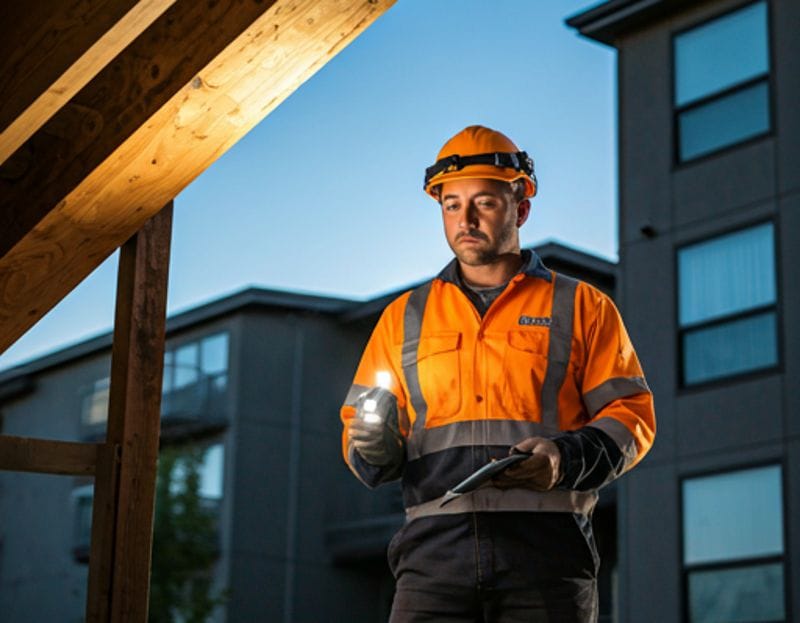
A San Francisco balcony or exterior appendage inspection is intended to determine whether the covered elements are in generally safe condition, adequate working order, and free from hazardous dry rot, fungus, deterioration, decay, improper alteration, or other unsafe conditions.
The purpose is to identify safety risks, document exterior appendage or exterior elevated element conditions, and clarify whether repairs, affidavits, reports, permits, or follow-up action may be required.
What Happens After the San Francisco Inspection?
After a Section 604 inspection, the responsible inspector signs the compliance affidavit if the covered exterior appendages are in generally safe condition, adequate working order, and free from hazardous deterioration, decay, or improper alteration. The completed affidavit is submitted to DBI Housing Inspection Services.
If the inspection identifies unsafe conditions, deterioration, decay, hazardous alteration, or repair needs, the owner may need corrective work, further evaluation, permits, and follow-up documentation before compliance can be completed.
For SB 721 or SB 326 properties, the owner or association must follow the applicable state-law reporting, repair, and record-retention requirements. DrBalcony helps owners understand which documentation path applies and what to do next.
Review the inspection findings
Inspect covered exterior appendages or exterior elevated elements
Identify unsafe conditions, deterioration, decay, or improper alterations
Prepare the required affidavit, report, or repair recommendations
Submit the Section 604 affidavit to DBI when applicable
Follow SB 721 or SB 326 reporting and repair requirements when applicable
Apply for permits if repair or replacement work requires approval
Complete corrective work and retain records for the next inspection cycle
San Francisco Inspection Process with DrBalcony
1
Property Review
We review your San Francisco property type, ownership structure, exterior appendages, and possible Section 604, SB 721, or SB 326 obligations.
2
On-Site Inspection
A qualified professional inspects decks, balconies, landings, stairways, corridors, guardrails, handrails, fire escapes, and related exterior elevated elements.
3
Affidavit or Report Documentation
We document exterior appendage or EEE conditions and prepare the appropriate affidavit, report, or repair recommendations based on the applicable requirement.
4
Repair and Permit Guidance
If unsafe conditions or deterioration are found, we help clarify next steps for further evaluation, repairs, permits, and follow-up documentation.
5
Compliance Support
We help San Francisco owners understand what to submit, what to retain, and how to move forward under Section 604, SB 721, or SB 326.
Why San Francisco Property Owners Choose DrBalcony
San Francisco balcony inspection compliance can be confusing because Section 604, SB 721, and SB 326 use different scopes, building categories, inspection cycles, documentation requirements, and terminology.
DrBalcony helps property owners get clarity, document exterior appendage and exterior elevated element conditions, and move forward with confidence if inspection, affidavits, reports, repairs, or permit coordination are needed.
- Apartment building owners
- Residential condominium associations
- HOA boards
- Hotel owners and operators
- Real estate investors
- Property managers
- Real estate investors
- Mixed-use building owners
- Owners who need help understanding Section 604, SB 721, or SB 326
San Francisco Balcony Inspection FAQs
No. Section 604 is a San Francisco Housing Code requirement for covered weather-exposed exterior appendages in certain San Francisco buildings. SB 721 is the California state law for qualifying apartment buildings with exterior elevated elements.
No. Section 604 is a San Francisco local affidavit requirement. SB 326 is the California state law for qualifying condominium associations and common interest developments with exterior elevated elements.
Section 604 applies to covered apartment houses, residential condominium buildings with three or more dwellings, and hotels with six or more guest rooms when qualifying weather-exposed exterior appendages exist.
Current San Francisco materials state that the Section 604 compliance affidavit is submitted every six years. Properties subject to Health and Safety Code Section 17973 may have a limited one-time ability to align the affidavit timing with SB 721 timelines, but no property may go more than seven years without submitting the affidavit.
Section 604 covers wood and metal decks, balconies, landings, exit corridors, stairway systems, guardrails, handrails, fire escapes, and parts of those elements in weather-exposed areas of covered buildings.
It may. Section 604 is the local San Francisco affidavit requirement, while SB 721 is the statewide apartment exterior elevated element inspection law. Some apartment buildings may need to evaluate both requirements.
It may. SB 326 applies to qualifying condominium associations and common interest developments. Section 604 may also apply to covered residential condominium buildings with three or more dwellings and qualifying weather-exposed exterior appendages.
Section 604 inspections may be performed by qualified licensed general contractors, certified building inspectors or building officials from recognized associations, licensed professional architects, or licensed professional civil or structural engineers. The inspector cannot be employed by the City and County of San Francisco while performing the inspection.
The completed Section 604 compliance affidavit is submitted to the San Francisco Department of Building Inspection Housing Inspection Services Division. The city’s affidavit packet lists the email dbi.hissection604@sfgov.org.
Yes. DrBalcony can review your property type, ownership structure, and exterior elements to help clarify whether Section 604, SB 721, SB 326, or more than one requirement may apply.
Need help with San Francisco balcony inspection requirements?
Get a clear answer on whether your property is covered by Section 604, SB 721, SB 326, or more than one requirement.