
Berkeley E3 Requirements at a Glance
The Berkeley E3 Program applies to many multi-unit residential buildings with exterior elevated elements. The inspection requirement is separate from ordinary maintenance and is designed to identify unsafe conditions, deterioration, corrosion, decay, water intrusion, and structural concerns before they become life-safety hazards.
| Requirement | Berkeley E3 Program Summary |
|---|---|
| Local program | Berkeley Exterior Elevated Elements Inspection Program |
| Code reference | Berkeley Municipal Code 19.40.040 |
| Common name | E3 Program |
| Applies to | Residential buildings with three or more dwelling or sleeping units and qualifying exterior elevated elements |
| Covered elements | Balconies, decks, landings, stairway systems, walkways, guardrails, handrails, and related parts |
| Height threshold | Walking surface more than six feet above adjacent grade |
| Material scope | Wood-framed and steel-framed exterior elevated elements; concrete elements are generally excluded |
| Multifamily rental cycle | Initial Berkeley inspection cycle began March 31, 2022, then every six years |
| Condominium cycle | Generally every nine years, with Berkeley’s current condo certification extension due no later than August 1, 2026 |
What Is the Berkeley E3 Program?
The Berkeley E3 Program is the City of Berkeley’s local exterior elevated elements inspection program for certain multi-unit residential buildings. “E3” stands for Exterior Elevated Elements.
Eligible property owners must have qualifying elevated exterior structures inspected by a licensed or certified professional. After the inspection, owners submit either an Inspection Certification or an Exemption Declaration to the City.
Berkeley has its own local compliance process, forms, deadlines, and program administration. The E3 Program is separate from ordinary maintenance and is designed to identify safety risks before they become life-safety hazards.
Does the Berkeley E3 Program Apply to Your Building?
The Berkeley E3 Program generally applies to residential buildings with three or more dwelling or sleeping units that have qualifying exterior elevated elements.
Covered Property Types
DrBalcony Engineered Plans
Do You Still Need to Respond If Nothing Looks Damaged?
Buildings may need compliance even if the balconies or decks appear to be in good condition. If no qualifying exterior elevated elements are present, exemption documentation may still be required.
What Counts as an Exterior Elevated Element in Berkeley?
An exterior elevated element is a structure or part of a structure that:
Key Criteria:
Common Examples:
Concrete elements are generally outside the Berkeley E3 material scope. Fire escapes are inspected through the fire inspection process rather than the E3 Program.
Berkeley E3 vs. SB 721 vs. SB 326
Berkeley property owners often hear several different terms: E3, SB 721, SB 326, balcony inspection law, exterior elevated element inspection, and deck inspection. These terms overlap, but they are not always the same thing.
Berkeley E3
Berkeley E3 is the city’s local exterior elevated elements inspection program. It applies to covered Berkeley buildings with qualifying elevated exterior elements and requires inspection certification or exemption documentation through the city’s process.
SB 721
SB 721 is the California apartment balcony inspection law. It generally applies to apartment buildings with three or more multifamily dwelling units and qualifying exterior elevated elements supported in whole or substantial part by wood or wood-based products.
SB 326
SB 326 is the California balcony inspection law for condominium associations and common interest developments. It requires periodic inspections of a statistically significant sample of qualifying exterior elevated elements by a licensed structural engineer or architect.
How They Work Together in Berkeley
For Berkeley properties, the local E3 Program is the practical compliance pathway. The city states that Berkeley property owners who comply with the E3 Program are not required to provide additional documentation to the State of California to show compliance with SB 721 or SB 326.
Apartment buildings, condominium projects, mixed-use properties, and buildings without qualifying exterior elevated elements can have different requirements.
Berkeley E3 Inspection Deadlines and Cycles
Most plans delivered in 5-10 business days.
Multifamily Rental Properties
Multifamily rental properties covered by Berkeley E3 were required to complete the initial local inspection cycle by March 31, 2022. After that, re-inspection is required every six years.
Condominium Projects
Condominium projects with qualifying exterior elevated elements and three or more dwelling units are generally on a nine-year inspection cycle. Berkeley has granted condominium associations an extension for E3 Inspection Program compliance, with inspection certification currently due no later than August 1, 2026.
Newer Buildings
Newly constructed residential buildings may still need inspection within the required cycle after the certificate of occupancy. A newer building should not automatically be assumed exempt.
Who Can Perform a Berkeley E3 Inspection?
Berkeley requires the inspection to be performed by a licensed or certified professional.
For condominium projects, the inspection must be performed by a licensed structural engineer, civil engineer, or architect.
For other covered buildings, qualified professionals may include licensed architects, licensed civil or structural engineers, qualified licensed contractors, and certain certified building inspectors or building officials, provided they meet the applicable requirements.
What Does a Berkeley E3 Inspection Look For?
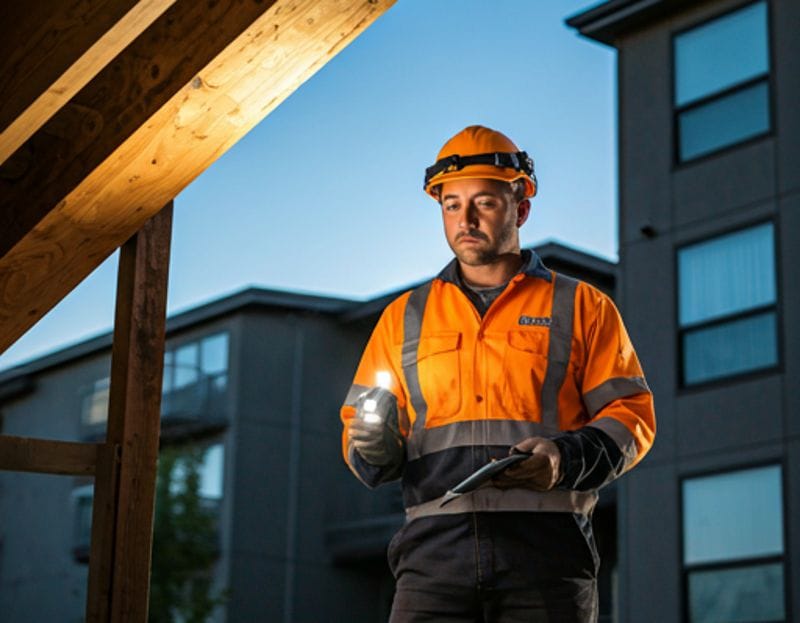
A Berkeley E3 inspection is not a cosmetic walkthrough. The inspection focuses on whether exterior elevated elements are in generally safe condition, adequate working order, and free from visible or concealed conditions that may indicate a safety risk.
What Happens After the Berkeley E3 Inspection?
After the inspection, the licensed or certified professional completes the appropriate inspection documentation. If the building is compliant and no corrective work is required, the owner can submit the required Inspection Certification to the City of Berkeley.
If corrective work is needed, the process may involve the steps listed here.
DrBalcony can help owners understand the report, prioritize next steps, and coordinate the documentation needed to move toward compliance.
Identifying the affected exterior elevated elements
Determining whether the condition is emergency or non-emergency
Preparing repair recommendations
Applying for building permits when required
Completing corrective work within the applicable timeline
Completing a follow-up inspection
Submitting updated certification after work is completed
Berkeley E3 Inspection Process with DrBalcony
1
Property Review
We review your building details, building type, ownership structure, and exterior elevated elements.
2
On-Site Inspection
A licensed or certified professional completes the required exterior elevated element inspection.
3
Engineer Review and Documentation
We document conditions and prepare the required inspection certification or exemption declaration.
4
Repair and Permit Guidance
We help you understand repair needs, permitting requirements, and recommended next steps.
5
Compliance Support
We support you through submission, respond to city requests, and help you stay on track.
Why Berkeley Property Owners Choose DrBalcony
Berkeley’s E3 Program can be confusing because it sits at the intersection of local city requirements, SB 721, SB 326, building type, ownership structure, and exterior elevated element definitions.
DrBalcony helps property owners get clarity, avoid costly mistakes, and move forward with confidence.
We serve a diverse range of clients in Berkeley, including:
- Apartment building owners
- Condominium associations
- HOA boards
- Property managers
- Real estate investors
- Mixed-use building owners
- Owners who received a Berkeley E3 notice
- Owners who are unsure whether their property is exempt
As licensed experts, we act as your technical partner throughout the compliance cycle, ensuring your assets are protected and your liability is managed through professional engineering oversight.
Berkeley E3 Inspection FAQs
No. SB 721 is a California statewide law that applies to many apartment buildings. Berkeley E3 is the City of Berkeley’s local Exterior Elevated Elements Inspection Program. For Berkeley properties, the city’s E3 process is the local compliance pathway.
No. SB 326 applies to condominium associations and common interest developments under California law. Berkeley E3 also covers condominium projects, but the inspection cycle and documentation are administered through Berkeley’s local program.
The program generally applies to residential buildings with three or more dwelling or sleeping units that have qualifying exterior elevated elements more than six feet above adjacent grade.
You may still need to evaluate whether the building has other exterior elevated elements, such as decks, landings, stair systems, walkways, guardrails, or handrails. If the building does not have qualifying elements but received a notice, an Exemption Declaration may be required.
Berkeley’s E3 Program generally applies to wood-framed and steel-framed exterior elevated elements, not concrete elements. However, property owners should verify the building’s actual structure before assuming exemption.
Condominium projects must be inspected by a licensed structural engineer, licensed civil engineer, or licensed architect.
Not necessarily. We use visual methods and borescope cameras whenever possible to minimize disruption while ensuring a thorough check of the internal structure.
If damage or deterioration is found, the owner may need repair recommendations, building permits, corrective work, and a follow-up inspection before submitting updated certification.
Covered multifamily rental properties are generally on a six-year cycle. Covered condominium projects are generally on a nine-year cycle.
Yes. DrBalcony can review the notice, help determine whether your property is covered, inspect qualifying exterior elevated elements, and help clarify the documentation and repair path.
Not sure if Berkeley E3 applies to your property?
Get a clear answer on whether your property is covered, what needs to be inspected, and how to move toward compliance.